When to Rent Crushers for Your Jobsite: A Contractor’s Guide
For most contractors, crushing comes up once in a while, not every day. You’ve got a few thousand tons of busted-up concrete, reclaimed asphalt, or oversized rock sitting on site, and the question isn’t really “should I own a crusher?” It’s “What's the smartest and most cost-effective way to turn this pile into something useful?”
Renting a mobile crusher can be the fastest and most economical way to turn a waste pile into a valuable resource, but only when the material and projected savings justify the investment. Here's how to decide.
The economics that actually drive the decision
The real comparison for buying versus renting a crusher is processing material on site versus hauling it off and trucking new aggregate back in. Every load of demolition debris you send to a landfill costs you twice - once in trucking and tipping fees to get rid of it, and again when you buy and haul in fresh base, fill, or road stone to replace it.
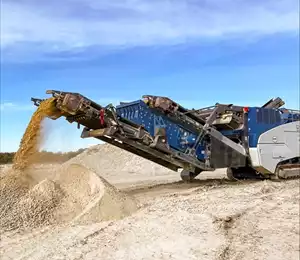
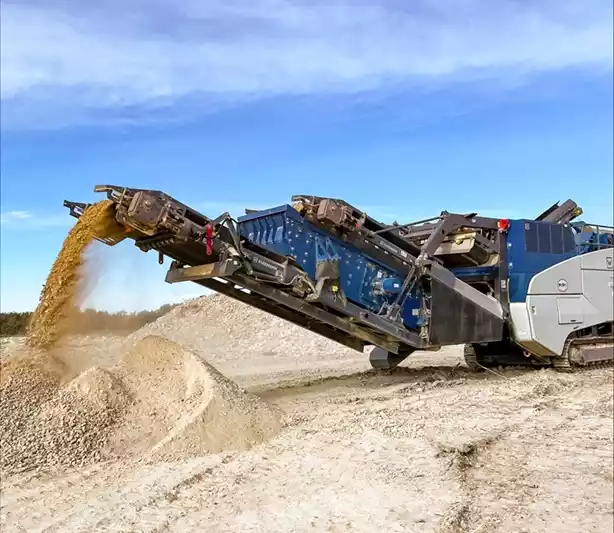
A rented crusher collapses both of those costs. Crush the concrete or rock where it sits and you produce spec aggregate on site (base material, fill, riprap, or recycled road base) from waste you were paying to remove. On a project with enough tonnage, the avoided trucking and disposal alone can cover the rental several times over before you count the value of the aggregate you keep. That math makes a short-term crusher rental pay.
When renting a crusher is the right move
Renting is the right decision when crushing is project-bound rather than continuous. Renting makes sense when:
- You have a single project or a defined campaign with finite tonnage.
- The volume doesn’t justify a six- or seven-figure machine sitting idle between jobs.
- You want the dealer to carry the maintenance and transport risk.
- Site access or duration is limited and you only need the machine for weeks, not years.
Renting also lets you put the right crusher on each job instead of forcing every material type through the one machine you happen to own.
When owning starts to make sense
Ownership makes sense when crushing is a year-round activity, like a contractor running a permanent recycling yard, a producer selling aggregate, or an operation feeding multiple jobs continuously. If the machine runs most of the year and crushing is its own revenue line, owning converts rental spend into an asset.
Match the crusher to the material
This is the step that quietly wrecks rental budgets when it’s skipped. A crusher that’s wrong for the material runs slow, wears fast, and produces off-spec product.
- Jaw crushers are the workhorses for primary crushing and recycling — busting down concrete, hard rock, and demolition debris into smaller, manageable pieces.
- Impact crushers shine on softer-to-medium material and produce a more cubical, spec-friendly product, which is why they’re favored for concrete and asphalt recycling into base aggregate.
- Cone crushers handle hard, abrasive natural rock and are typically used for secondary crushing to tighten the final gradation.
Add a screen when you need clean, sized product. A coarse screen ahead of the crusher removes dirt and fines, and a screen after it separates your finished gradations. Getting this combination right is the difference between a rental that pays and one that just makes noise.
Sizing it to the jobsite
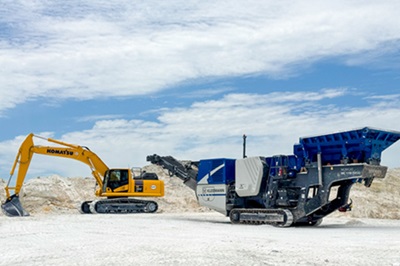
Once the type is right, size the machine to the work: target tons per hour and per day, maximum feed size, the site footprint, and how the machine moves and powers. Mobile, tracked plants are built for exactly this. They tram around the site, set up fast, and many now run efficient or all-electric drive to cut fuel. Undersize the plant and you bottleneck the job; oversize it and you’re paying for capacity that isn’t fully utilized.
Questions to answer before you book a rental
Have these ready and a dealer can spec the right machine in one conversation:
- What material are you crushing, and how hard or abrasive is it?
- Roughly how many tons total, and over how many days or weeks?
- What finished product and gradation do you need?
- What’s the largest piece going in?
- How tight is the site for access and setup?
Renting crushers from Kirby-Smith Machinery
Kirby-Smith Machinery runs a mobile crushing and screening rental fleet built around Kleemann — jaw, impact, and cone crushers plus Mobiscreen screening plants — backed by branches and field service across Oklahoma, Texas. Because the same team handles the application up front, you get a crusher matched to your material and tonnage, not just whatever’s on the yard. And if a project turns into recurring volume, they can model rent-versus-own with you before you commit.
Tell us what you’re crushing and how much and see Kirby-Smith's crusher rental fleet. Our team can size the right plant for your jobsite and tell you whether renting pencils out better than hauling it off.