Many machines run long hours each day, often in varied conditions and applications that can lead to uneven and premature wear. Spending just a few minutes checking your machine at the start of a shift and throughout the day helps identify potential problems early and keeps equipment running longer.
“A consistent inspection routine is one of the easiest ways to reduce downtime, control repair costs, and keep equipment working when it’s needed most,” said Kirby-Smith Machinery Inc. (KSM) Product Support Sales Representative (PSSR) Colten Tipton. “A few minutes inspecting your machines can prevent hours, days or longer in downtime. Walking around them is very important to maintaining and operating them. It’s one of the simplest and most effective ways to protect your investment.”
Inspections don’t require specialized tools or extensive training, according to Tipton. Instead, they focus on paying attention to the machine and identifying small issues before they turn into expensive repairs.
Start with a 360-degree walkaround
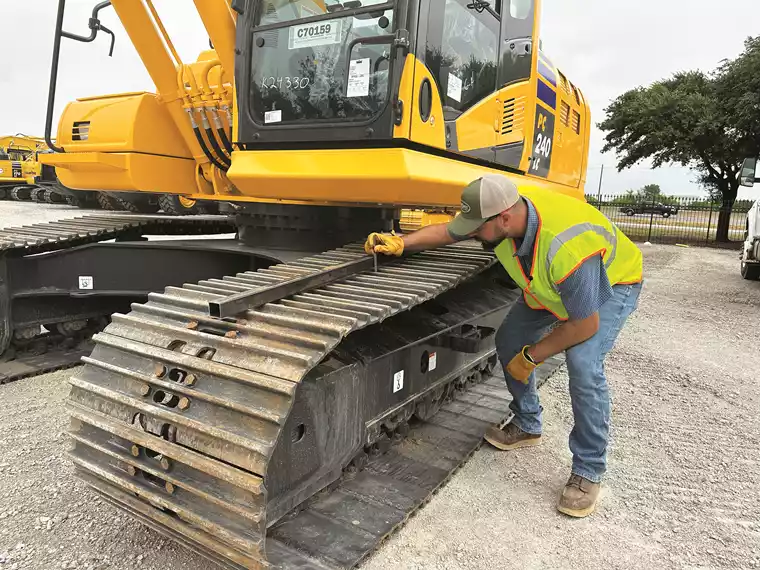
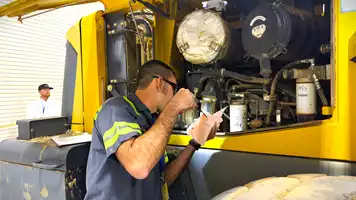
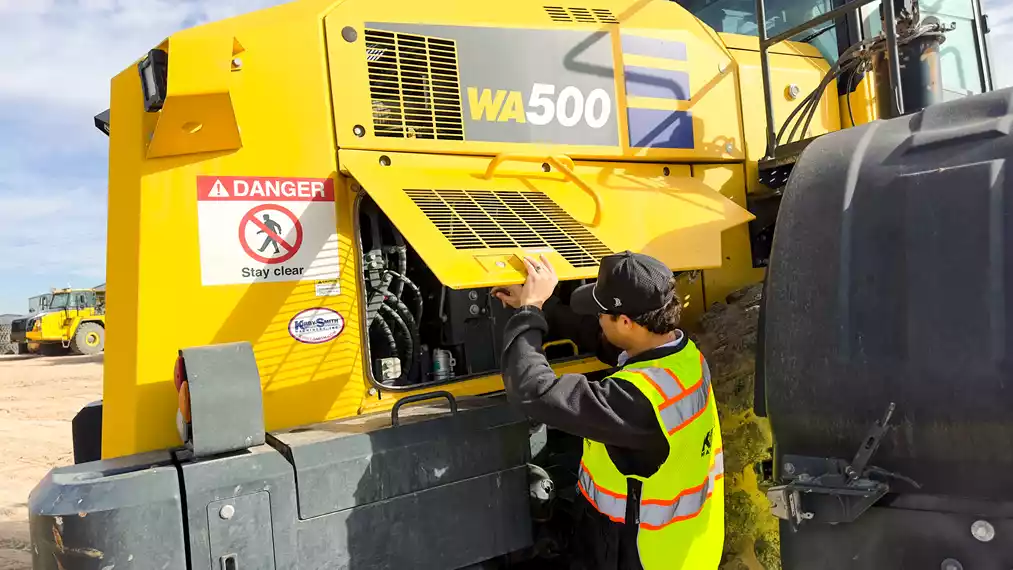
Tipton recommends beginning every inspection with a complete walkaround of the machine. This gives operators a chance to look for obvious damage or anything that appears out of place. Check tires or tracks for excessive wear or damage. Look for broken lights, loose guards, or anything that may have been damaged during the previous shift or during operation. Even small issues, like a cracked lens or missing bolt, can lead to bigger problems if left unattended.
Look for leaks and wear
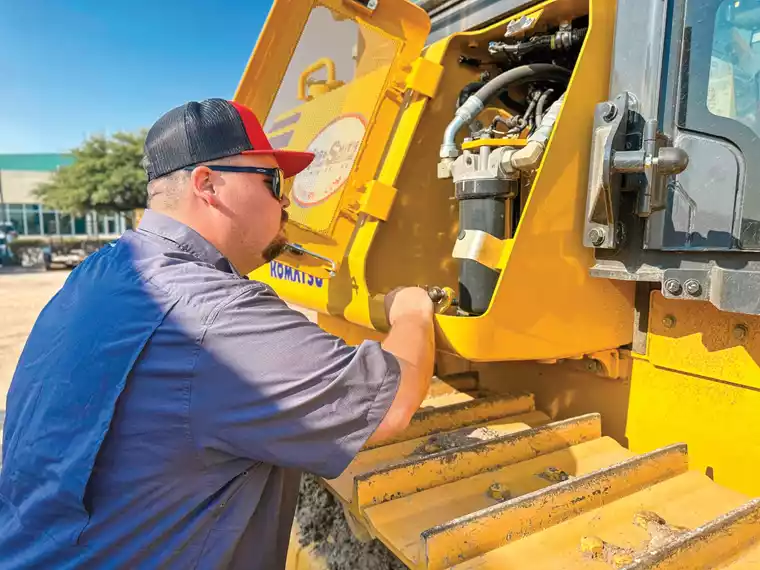
Hydraulic leaks are one of the most common problems operators can catch during a daily inspection. As you walk around the machine, check cylinders, hoses and fittings for signs of fluid leaks or wet spots.
“Pins and pivot points should also be examined closely,” noted Tipton. “If a pin isn’t taking grease or appears to have too much play, it may indicate wear that needs to be addressed. Catching these issues early can prevent accelerated wear or component failure.”
Check fluid levels
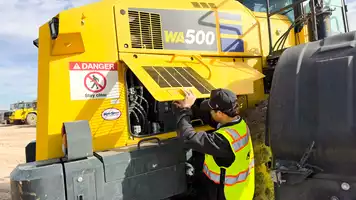
Another critical step in any inspection is verifying fluid levels. Engine oil, coolant and hydraulic fluid should all be checked to ensure they are within recommended ranges. Low fluid levels can lead to overheating, reduced performance, or severe engine or hydraulic damage.
Pay attention to machine alerts
Modern machines provide valuable information through onboard monitors. Operators should review any alerts or notifications before beginning work. These warnings can indicate issues that require immediate attention.
However, Tipton stresses that digital alerts shouldn’t replace a physical inspection.
“You’ll get notifications on the monitor, but getting out and actually putting your hands on the machine is probably the most important thing,” stated Tipton. “If you need any help, you can always reach out to your Kirby-Smith product support rep or nearest branch service department, and we would be happy to help.”